
 +38 (067) 965-77-57
  info@bud-komplex.com.ua


Why do we choose frame houses (advantages and disadvantages)?
Frame construction is not a new technology. Cheap wooden houses have been built for several centuries, and are especially common in Europe, and the Scandinavians have honed the technology of building warm and durable Finnish frames due to the severe climate. In Ukraine, frame houses are less popular, and primarily because of people’s distrust of them.
This attitude is due to a lack of information about this technology, a large number of different companies on the construction market: many of them, as they say, “take the price”: they build extremely cheaply, use low-quality, low-grade materials, violate the technology. The reputation and construction of frame houses without projects (with all the ensuing consequences) has spoiled quite a bit.
The purpose of this article is to dispel some myths and show the advantages and disadvantages of a frame house
The very name of the technology comes from the word “frame”, which, in fact, is the basis of the entire house. It usually consists of a wooden base (it is important not to build a turnkey frame from raw wood). Inside and outside, the frame can be sheathed with cement chipboards, various panels or planed dry wood. From the inside, the frame house must be correctly vapor-insulated (this involves gluing the film seams), we always install a windproof membrane or an Isoplat plate under the outer cladding. The resulting space is filled with insulation. Its role can be basalt wool of a certain density. On the outside, the house can be sheathed with painted wood, siding, but it is not rare to find options covered with facade plaster.
It would seem that the technology is simple, but houses with the correct frame and insulation are quite reliable and durable (again, if the house was built correctly:
- According to the project of the engineer-architect
- From dry wood
- With respect to technology
- Under technical supervision
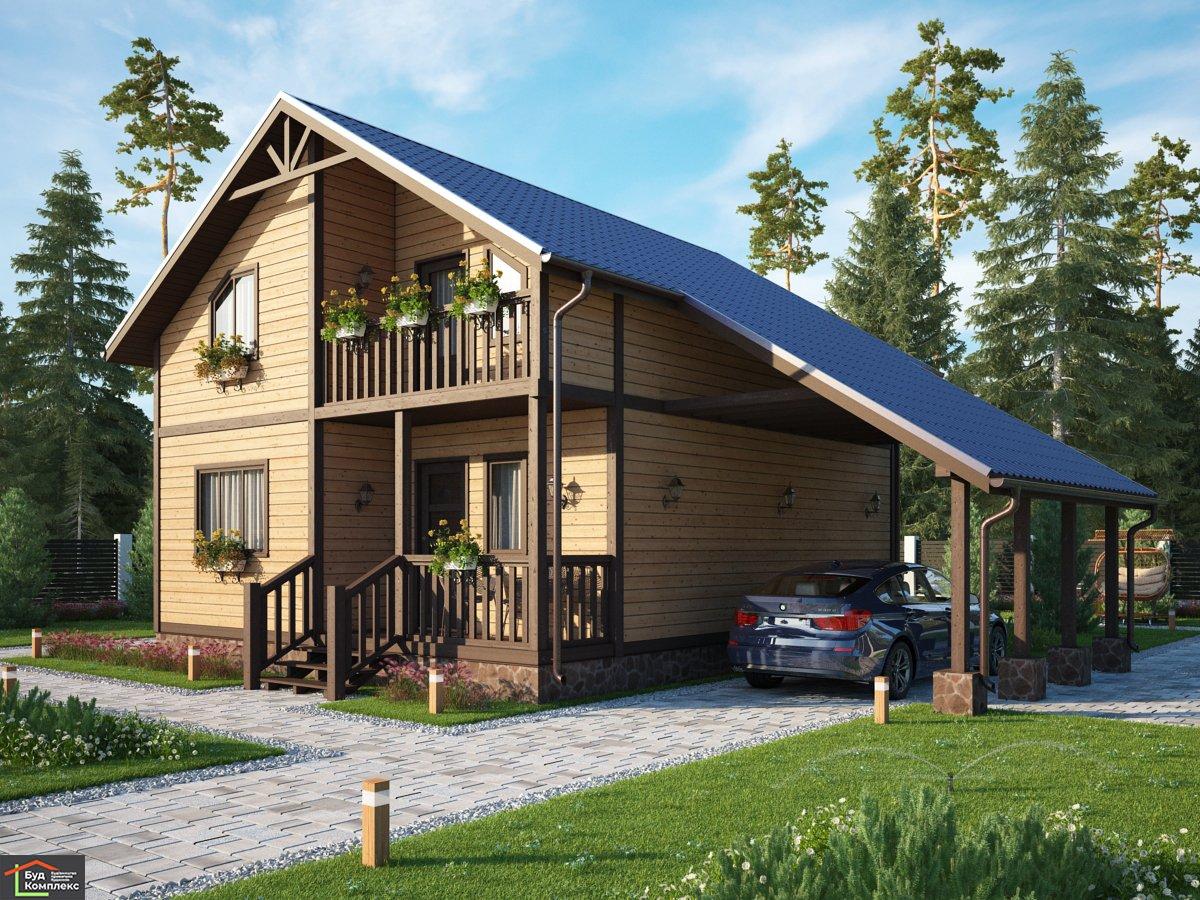
Pros and cons of a frame house illustration
In terms of performance, a frame house at a lower cost is not inferior to houses built from heavier materials. Let’s consider the pros and cons of frame houses. Advantages (pluses) of frame houses, we are talking about the right frame houses:
1. Speed.
Such houses are built within a few months, which is quite fast for the construction industry.
2. Price.
Relatively not high cost of housing. In terms of price-quality ratio, a frame house in most cases wins the competition from houses made of other materials and built using other technologies.
3. The light weight of the structure reduces the requirements for the foundation base.
There is no need for reinforcement in the foundation, which is necessary for heavier buildings. That further reduces costs and improves the economic component of the project.
4. Energy efficiency.
The material of the house is wood and basalt insulation. Chamber-dried wood is a lightweight and durable material. Basalt insulation has a very low thermal conductivity. It’s good. For comparison: a frame wall with a thickness of 150 mm in terms of its heat-saving properties is equal to a wall made of timber with a thickness of at least 350-400 mm. There is no need to talk about bricks.
5. Externally, frame houses are aesthetic and unique.
The wooden frame allows you to implement more design possibilities.
6. A frame house is relatively easy to complete and even re-insulate.
In Europe, we see frame houses that are already 150-200 years old. Just replaced the insulation and installed a new outer skin. The base of the house is preserved in the form of external protection against snow and rain, and internal protection against steam.
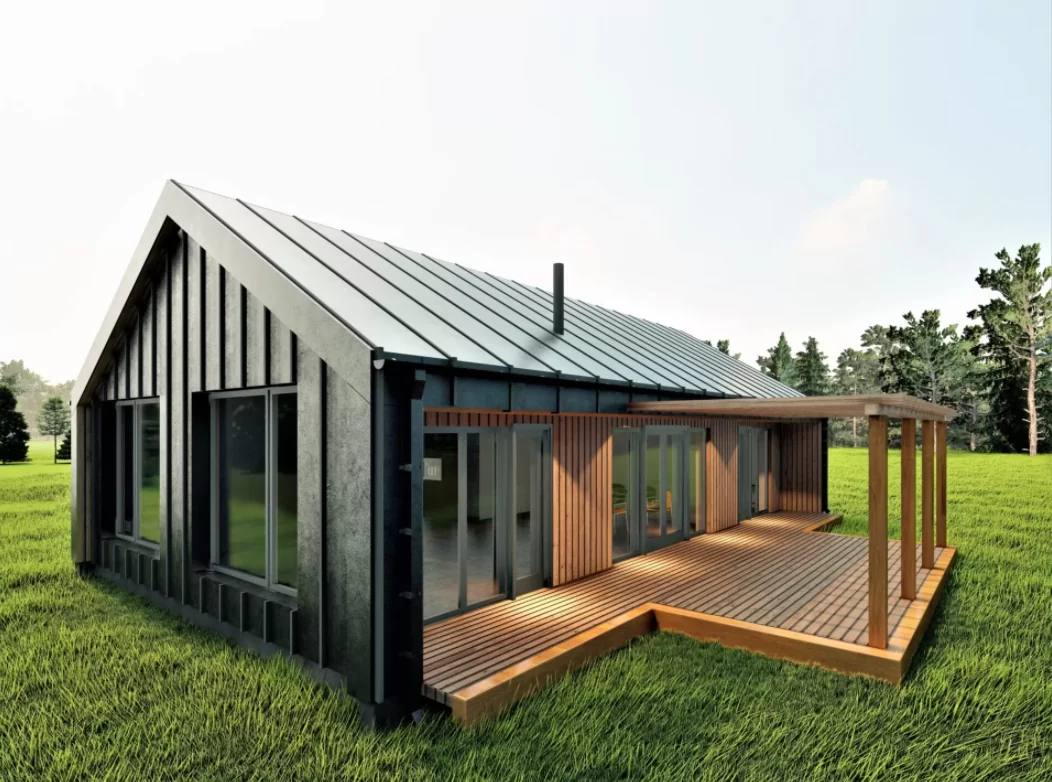
Frame buildings have their disadvantages. It is very important to consider the disadvantages and assess how difficult it is to reduce their impact on the operation of the home, in some cases it is possible to completely eliminate the problem, such a successful fight against rodents is by installing a metal mesh, hence the illustration.
Disadvantages (cons) of frame houses:
1. A frame house, sorry for the banality, is not a stone house, so it is unreasonable to expect that the house will be as monumental as, for example, brick. Although properly built and having an engineering design, a frame house is actually strong and reliable. And it really is.
2. Frame houses are mostly wooden, and therefore, sooner or later, repainting of the exterior cladding (if it is made of wood) will be required – approximately every 5-7 years. And for a certain period of time, its complete replacement will take approximately 25-30 years.
3. After a certain period, it may be necessary to replace the insulation. The manufacturer currently provides a 50-year warranty. 4. A frame house is convenient not only for humans, but also for mice. The problem with mice is solved at the design stage very easily: with the help of a special grid. Which does not allow mice to “walk” on the walls and ceiling of the house.
It turns out that frame construction does not have many disadvantages and most of them are correctable.
As for the pros, there are many of them and some of them are very strong arguments for choosing this type of construction.
Conclusion – a frame house is worth the money.
And in our difficult economic times, high-quality housing with a relatively low cost is relevant (Frame house or apartment – an article comparing an apartment in a big city and a frame house, in terms of price, quality of living, environmental aspects).
Frame construction is not the distant future, but the present. Therefore, the choice of a frame house as a country house or as an alternative to an apartment for permanent residence is quite reasonable.




 Viber
Viber  Telegram
  WhatsApp
  E-mail